Table Of Content
The staggered walls provide room for generous planting pockets for green and burgundy foliage plants. The soil around downspouts can get too soggy for many types of plants after it rains, but you can still enjoy plenty of colorful perennials that will thrive in the extra moisture. This problem-solving garden plan relies on tall joe-pye weed to grab attention away from the downspout itself. Then, pink turtlehead, dwarf sweet flag, and lobelia camouflage the area around the opening to help it blend into the landscape. Once the wildflowers are established, they will still need to be monitored and managed to ensure they are healthy and thriving.
Remove Existing Weeds
Chaos Gardening Is the Carefree Approach to Gardening Anyone Can Try - Better Homes & Gardens
Chaos Gardening Is the Carefree Approach to Gardening Anyone Can Try.
Posted: Wed, 26 Jul 2023 07:00:00 GMT [source]
Similarly, if the soil lacks essential nutrients, you can incorporate organic matter or apply a balanced fertilizer to provide the necessary nutrients for healthy wildflower growth. Creating visually appealing color combinations is another exciting aspect of choosing wildflowers for your front yard. Consider the overall aesthetic you want to achieve and experiment with different combinations to find what works best for you.
Select Your Wildflowers
The tall Mexican fan palms, Washingtonia robusta, were preexisting on the property. Our plans will help even novice gardeners achieve a bright, colorful perennial display. Be sure to read the package instructions carefully to determine how much seed you will need for your specific area.

Prepare Your Soil
Most wildflowers do not need as much water as traditional garden plants, but that doesn’t mean that they don’t need any water at all. To keep your wildflowers healthy, water them deeply once a week during dry spells. It’s also important to water them early in the morning or late in the evening to prevent evaporation. Generally, wildflowers do not require a lot of water once established.
Wildflower Garden Ideas for a Wild Backyard Oasis
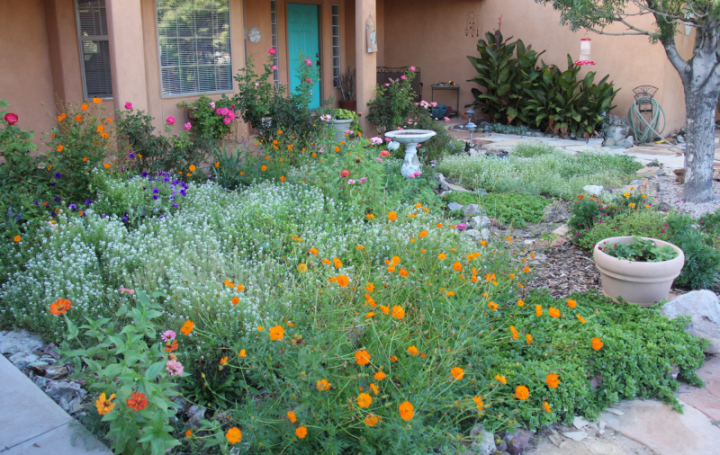
The front yard is often the first thing people see when they visit your home, and it sets the tone for the rest of your property. Instead of the traditional manicured lawn and perfectly pruned shrubs, why not create a wildflower garden? Not only will it add a pop of color and interest to your landscape, but it also supports pollinators and promotes sustainability. In this article, we will discuss how to design a front yard wildflower garden that is both beautiful and beneficial to the environment. Using wildflowers as borders or focal points in your front yard landscaping adds a touch of beauty and uniqueness to your outdoor space. It allows you to showcase your creativity while supporting local wildlife and creating a welcoming environment for pollinators.
Wildflower Garden Ideas for Small Front Yard Spaces
As with any plant, it is important to research and understand the growing conditions and care requirements for each edible species you choose. Additionally, ensure that any plants you select are not harmful to pets or children. Applying a layer of mulch to your wildflower garden can help to retain moisture in the soil, suppress weed growth, and regulate soil temperature. Choose a natural mulch, such as shredded leaves or bark, and apply a 2-3 inch layer around the base of your plants.

If you are in the midst of a major landscaping project, like adding a walkway or installing a swimming pool, you may find yourself with piles of soil just sitting there. Don’t be afraid to tap into that as part of your soil base or your wildflower project. The creator of the gardening website Home for the homegardenartful.com, Megusta. He has devoted his life to horticulture and has become one of the most recognizable and dependable figures in the country when it comes to organic gardening as well as sustainability. He spends his free time with his wife and children on their organic farm just north of Atlanta, in the state of Georgia, or working in his sizable, raised-bed vegetable garden.
Full sun will lend itself to growing warm-season annuals or vegetables, while shade will help keep a seating area cooler in summer. Your front yard is the first thing that neighbors and visitors see, and is your best opportunity to create a first impression. Traditionally, a front yard consisted of a green lawn, a few foundation shrubs, a cement driveway, and sidewalk that leads to the front door. This often-overlooked and underutilized outdoor space presents many opportunities, as well as unique design challenges. If installing your wildflower garden involves too much time and energy, consider handing the job over to a local landscaping professional.
Native grasses are an essential component of a wildflower meadow garden. They provide structure and texture to the space and can help support a variety of native wildlife. Some popular choices for Southern wildflower meadow gardens include big bluestem, switchgrass, and little bluestem.
7 Small Flower Garden Ideas to Bring Big Color to a Compact Area - Better Homes & Gardens
7 Small Flower Garden Ideas to Bring Big Color to a Compact Area.
Posted: Tue, 06 Jun 2023 07:00:00 GMT [source]
Consider siting your seating area near a focal point of your garden, such as a colorful grouping of wildflowers, for maximum impact. To achieve this look, it’s essential to use a mix of wildflowers that will bloom at different times throughout the season. A wildflower mix that includes a variety of annuals and perennials will ensure that there are always flowers in bloom, providing a beautiful backdrop for your yard. If you’re looking for a low-maintenance way to add beauty and nature to your front yard, a wildflower garden might be just what you need.
Unlike traditional lawns or gardens, wildflower gardens don’t require frequent mowing or pruning. Instead, they can thrive with minimal maintenance, as long as they receive enough sunlight and water. Wildflower gardens can also be a rewarding project for the home gardener, and a wonderful way to utilize open space in the landscape. They also provide a tasty playground for wildlife and pollinators, and can help stabilize difficult soil areas with their hardiness and adaptability.


No comments:
Post a Comment